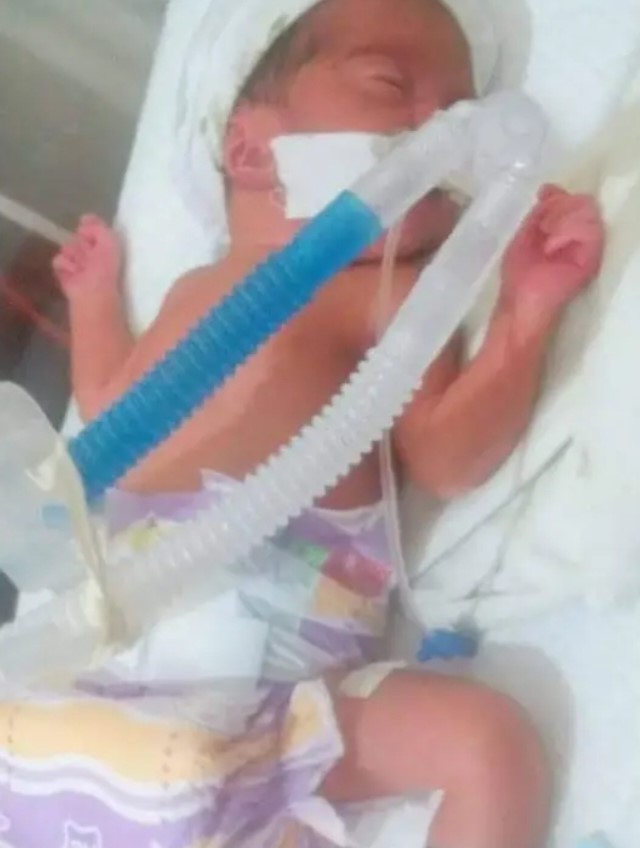
In Barangay San Roque, San Pablo City, 33-year-old Margie Dimaano continues her daily work in her small store. At first glance, her life seems normal. But just a year ago, she experienced a deep loss that few people talk about—the death of her newborn son, who passed away less than one day after birth.
On February 6, 2024, Margie gave birth early at 30 weeks of pregnancy at San Pablo City General Hospital. The hospital did not have a neonatal intensive care unit (NICU), so the doctors advised that the baby should be transferred to a private hospital in Sta. Rosa, Laguna. However, the private hospital required a down payment of ₱80,000, which the Dimaano family could not afford.
“He was alive when they gave him to me. He even cried, but only for a moment,” She said. “They told me he needed full medical support to live, but we had no money.”
Gabriel died early the next day. He was wrapped in a hospital blanket and returned to Margie with both his birth and death certificates.
The Department of Health has reported that many newborn babies in the Philippines still die because of a lack of access to proper medical care, especially for poor families. Even though Laguna has improved its healthcare services, San Pablo’s public hospital still does not have the equipment needed for emergency care for newborns.
After three days, she was sent home. She did not receive any counseling or emotional support. No health worker checked on her. “In our neighborhood, people don’t talk about babies who die, it’s like they expect you to forget.” She said.
In many provinces, families mourn silently when they lose a baby. There are often no formal prayers, funerals, or blessings. Instead, parents do simple rituals like buhos tubig, where a short prayer is said for babies who died before baptism. Many mothers, like Margie, carry this pain without anyone to talk to.
Later, she found help through the internet. She joined the Miscarriage, Stillbirth & Infant Loss Support Group – Philippines, a Facebook group where mothers from all over the country share their stories. One member told her about the Philippine General Hospital (PGH) Psychosocial Support and Crisis Intervention Unit. Although PGH is located in Manila, it offers free online counseling for people in far places.
PGH’s Women’s Desk is part of its Department of Psychiatry. It has helped many women who suffer from post-partum depression, trauma, and child loss. They use phone calls or video calls to help mothers in remote areas.
In San Pablo, support for grieving mothers is still very limited. Health workers mainly focus on physical care. But the Buhay Ina, Buhay Bata Foundation, a maternal health group based in Laguna, is now working with the city’s health office to teach midwives and barangay workers how to support mothers emotionally.
Every year, on her son’s birthday, Santos lights a candle at San Pablo Cathedral. She does this quietly. “I didn’t have a birthday for him. I just lit one candle,” she said.
“I am still a mother,” she added. “Even if no one else sees him, I carry my child with me every day.”
San Pablo City continues to improve its services for mothers and children, but the story of Margie Dimaano highlights the urgent need for stronger healthcare systems. Public hospitals must be equipped to handle emergency cases like premature births, and financial support should be available for families who cannot afford private care. In communities like Barangay San Roque, where resources are limited, proper healthcare can mean the difference between life and loss.
More than sympathy, what grieving mothers need is a healthcare system that responds with speed, compassion, and complete care. No mother should lose a child simply because help was out of reach.
 YOHANNAN
Leave a comment